The race to build the biggest AI model in the largest data center captures headlines. But the most important AI might be the one in your pocket, not the cloud. Edge AI—running locally on devices—offers advantages that cloud AI cannot match: speed, privacy, and availability. As devices grow more capable and models grow more efficient, the edge is becoming a serious frontier.
Apple's entry into the AI race illuminates this dynamic. They're not trying to build the biggest brain; they're trying to build the most personal one.
The Cloud Trade-Off
Cloud AI has powered the current boom. The massive models that amazed the world run in data centers, accessible via network connections. This architecture enables scale—a single model can serve millions of users—and it concentrates the expensive computing resources where they can be used most efficiently.
But cloud AI comes with inherent limitations. Latency: every request must travel to a distant server and back, adding delay that's noticeable in interactive applications. Connectivity: no network means no AI, which matters on planes, in tunnels, in rural areas, and anywhere else the connection is unreliable. Privacy: your data must leave your device and be processed by someone else's computers, creating both security risks and privacy concerns.
For many use cases, these trade-offs are acceptable. But for others—personal assistants that handle sensitive information, real-time applications that can't tolerate delay, systems that must work offline—they're not.
The Edge Advantage
Edge AI flips the equation. Models running on your device have zero network latency—the compute happens where the data is. They work offline—no connection required. They keep your data local—nothing leaves the device.
These aren't marginal improvements; they're qualitative differences. A voice assistant that responds instantly feels different from one that pauses for network round trips. A system that works in airplane mode is fundamentally more reliable than one that doesn't. Privacy that's enforced by architecture—data never leaves the device—is stronger than privacy enforced by policy.
The challenge has been capability. Edge devices have limited compute compared to data centers. Running large models required more memory and processing than phones or laptops could provide. The trade-off was power vs. privacy, capability vs. convenience.
The Hybrid Architecture
The emerging solution is a hybrid architecture. Your phone handles the personal, immediate requests—"Find that photo of my cat," "Set a timer for five minutes," "What's on my calendar today?" These tasks need to be fast, private, and available offline. A small, efficient model running locally handles them.
The cloud handles the heavy reasoning—"Plan my vacation to Japan," "Analyze this legal document," "Help me debug this complex code." These tasks require more computational power than a phone can provide, and the latency trade-off is acceptable because the tasks themselves take time to complete.
This hybrid approach gives you the best of both worlds. Local models for speed and privacy where it matters most. Cloud models for capability when you need it. Intelligent routing between them based on the task at hand.
The Biological Parallel
This mimics biology. Your nervous system doesn't route everything through the brain. Your spinal cord handles reflexes—fast responses that can't wait for cortical processing. You pull your hand from a hot stove before you consciously feel pain. The brain handles planning, reasoning, and complex decisions that benefit from slower, more deliberate processing.
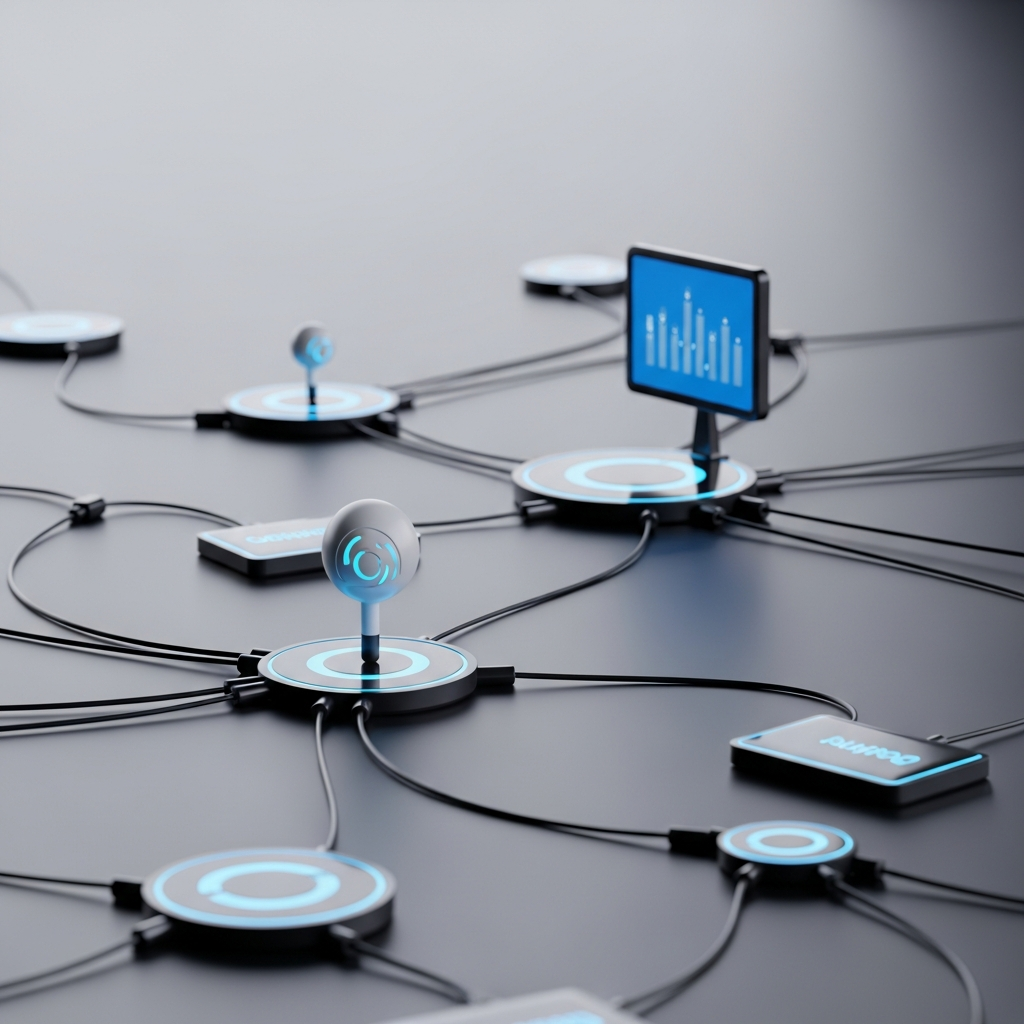
We are building a nervous system for the planet where intelligence is distributed to the edges, not hoarded in the center. Edge devices handle the reflexes—immediate, local responses. Cloud systems handle the cognition—complex reasoning that benefits from massive computation. The two work together, each doing what it does best.
The Smart Environment
As edge AI proliferates, intelligence pervades our environment. Not just phones, but watches, earbuds, home devices, cars, appliances—each with enough local intelligence to understand and respond to its context. The smartest room isn't the one with the best server connection; it's the one where the intelligence is in the walls, the furniture, the devices themselves.
This ambient intelligence creates new interaction patterns. Devices that anticipate needs based on local context. Systems that respond to voice, gesture, or presence without cloud round trips. Environments that adapt to you without sending your data anywhere.
The edge is where AI becomes invisible—so fast and responsive that you don't notice it's there, so private that you don't worry about it watching. That invisibility is the goal. The technology that matters most is often the technology you stop noticing because it just works. Edge AI is on its way to that kind of transparency.