On June 12, 2026, Bigeye published the second installment of its AI Autopsy series. The subject was Klarna. Two years earlier, the buy-now-pay-later company announced a massive deployment of OpenAI models across its customer service operations. The original press release claimed the system handled 2.3 million conversations in its first month. The software cut average handle times from eleven minutes to under two minutes. Management froze hiring. They reduced total headcount from 5,500 down to 3,400. The CEO went on television to declare that artificial intelligence could perform the work of seven hundred full-time employees. The market applauded. The board cheered. The narrative set a template for every executive seeking a quick path to higher margins.
Then the quiet unwinding began. The Bigeye report details exactly what happened next. By late 2025, customer satisfaction metrics had deteriorated significantly. Edge cases overwhelmed the routing logic. Emotionally charged interactions ended in algorithmic dead ends. The cost per transaction had indeed fallen from thirty-two cents to nineteen cents. The volume of repeat inquiries, however, spiked. The system could handle the simple path perfectly. It failed entirely when the context required human judgment.
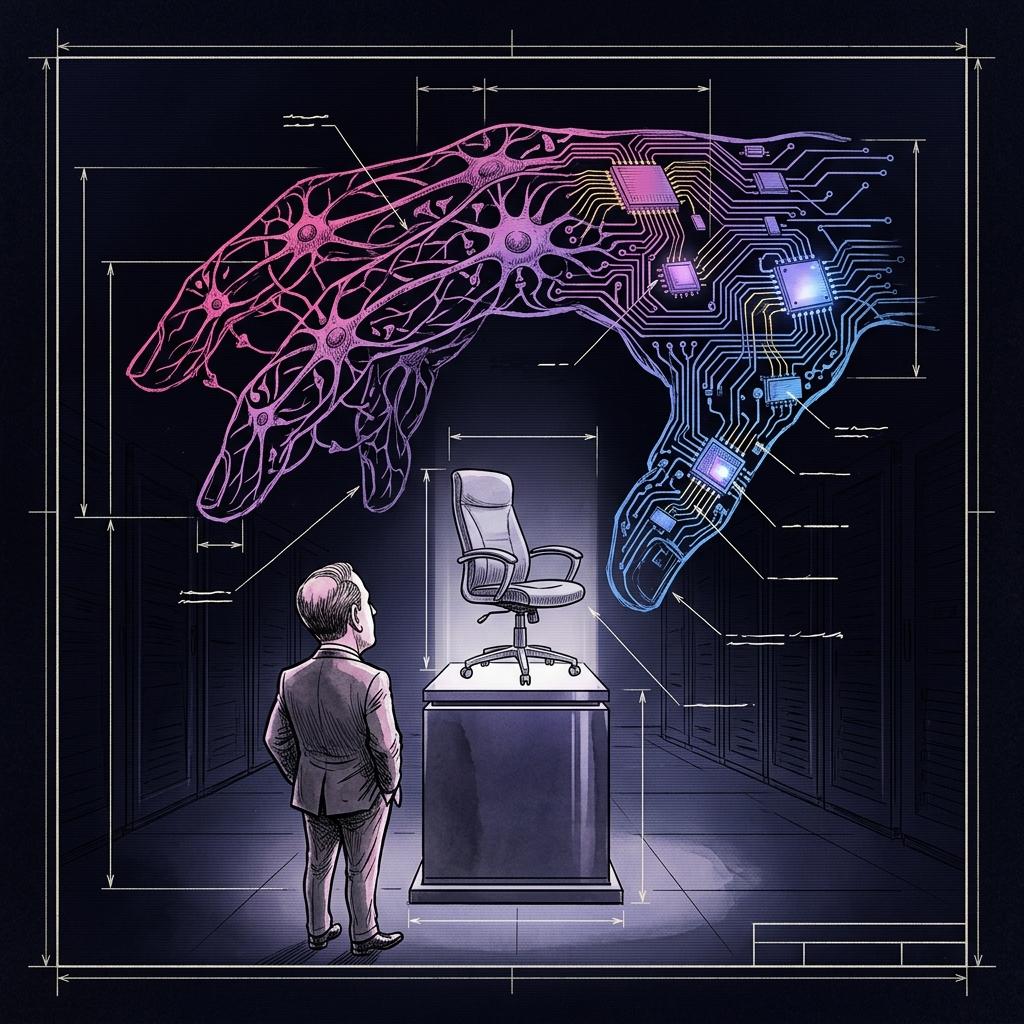
The company had to reverse course. Digital Applied reported on March 9, 2026, that reversing the layoffs required recruiting and training new staff at a steep premium. The original cost savings evaporated under the weight of the cleanup effort. Klarna found itself quietly hiring contractors at forty-one dollars an hour without benefits. The grand experiment in automation ended with empty chairs and a desperate scramble to fill them.
This sequence of events is repeating across the corporate landscape. Executives fell for a false premise. They believed a machine could step into a role, perform the identical function, and draw zero salary. They misunderstood the shape of the technology. They misunderstood the nature of the work. They traded predictable human payroll for volatile compute overhead. Now they are paying the price.
The Truth About AI and Labor Cost Transformation
For the past two years, boardrooms fixated on a singular goal. They wanted to eliminate payroll. The phrase AI and labor cost transformation became a mandatory slide in every quarterly earnings deck. Leaders ordered their deputies to find headcount they could swap for API keys.
The logic seemed flawless on paper. A human customer service agent costs sixty thousand dollars a year. A subscription to a frontier model costs twenty dollars a month. The math favored the machine. Companies modeled their financial projections on a linear substitution curve. You subtract the human salary. You add the software license. You pocket the difference as profit.
The flaw in this model lies in a fundamental misunderstanding of how agentic systems operate. Generative models do not function like traditional enterprise software. Traditional software has a fixed build cost and near-zero marginal execution cost. A database query costs fractions of a cent. A deterministic algorithm runs the same way every time. You build it once and run it infinitely.
Agentic systems burn raw material. They consume compute. Every time an agent reads a prompt, searches a database, evaluates a response, and generates a reply, it spends tokens. The interaction is rarely a single turn. Autonomous agents operate in loops. They verify their own work. They correct their own mistakes. They rewrite their own code. A complex customer service inquiry might require forty distinct model calls before the agent finalizes an answer.
The State of Brand reported on May 10, 2026, that AI costs for some early adopters have risen six hundred percent since 2024. The publication highlighted a viral post from the CEO of Swan AI. He proudly shared a monthly Anthropic bill of one hundred and thirteen thousand dollars. He framed the expense as the cost of running an autonomous business.
The market is slowly waking up to the reality of these bills. You eliminate the human worker. You deploy the agent. The agent encounters a confusing database conflict. The agent loops seventy times trying to resolve the error. The token usage multiplies. Your cloud provider sends an invoice that dwarfs the monthly salary of the worker you fired. The initial financial models collapse under the weight of utility bills.
The Stateless Machine
The math breaks down further when you examine the physical reality of the technology. A human employee possesses state. They remember the meeting from yesterday. They remember the angry tone of the client. They remember the unwritten rule about the legacy database. This state is maintained biologically for free. The human brain consumes roughly twenty watts of power to hold all of that context in working memory.
A large language model has no state. Every single API call is a blank slate. To give the model state, you must pass the entire context window back to the server. If a customer service interaction involves fifty messages, the system must read message one through forty-nine just to generate message fifty.
This architectural constraint causes the compute bill to explode. You are paying the cloud provider to read the exact same text over and over again. Human labor cost scales linearly with time. Agent compute cost scales quadratically with conversation length.
When Anthropic released Claude 3.5 Sonnet in June 2024, the cost was three dollars per million input tokens. This sounded cheap to executives accustomed to human salaries. They assumed a million tokens would last a long time. They failed to realize that an autonomous agent reading a large codebase or a long customer history consumes a million tokens in a matter of minutes. The agent reads the file fifty times a day. The models require massive context windows to attempt resolution.
This economic reality destroys the traditional budgeting process. A department head can forecast human payroll with exact precision. You know exactly how much your team will cost next month. You cannot forecast agentic compute costs. A sudden spike in complex customer issues will cause your token consumption to surge overnight. Companies are exposing their operating margins to the unpredictable behavior of language models. When the model hallucinates, it burns money. When the model gets stuck in a logic loop, it burns money. The finance department cannot control the burn rate without throttling the system and degrading the customer experience.
The Edge Case Explosion
The Klarna autopsy reveals the exact point of failure. The AI handled routine queries flawlessly. A customer wants to check a balance. A customer wants to change a payment date. The model retrieves the data, formats the response, and closes the ticket. The efficiency metrics look spectacular.
The system breaks when reality refuses to fit the training distribution. A customer disputes a charge because the merchant shipped a broken item. The merchant went out of business. The tracking number shows a delivery to the wrong zip code. A human agent reads that paragraph and instantly understands the nuance. The human feels empathy. The human knows which rule to bend to retain a loyal buyer.
The AI agent tries to apply the standard return policy. It asks for a return receipt from the bankrupt merchant. The customer gets angry. The agent responds with a polite, rigidly unhelpful apology. The customer escalates. The agent loops back to the policy document. The interaction becomes a nightmare.
These edge cases are the true test of a service organization. They represent the moments where brand loyalty is forged or destroyed. When you automate the entire layer, you subject your most vulnerable customers to algorithmic bureaucracy.
The failure cascades through the organization. The customer takes the complaint to social media. The public relations team has to intervene. The legal department gets involved. The cost of resolving the single botched interaction exceeds the savings generated by automating ten thousand routine queries.
The initial success of the deployment creates a false sense of security. The dashboard shows green lights. The handle times are down. The board demands further cuts. The company eliminates the tier-two support staff. They eliminate the quality assurance team. They dismantle the very infrastructure required to catch the machine when it falls.
The Institutional Memory Wipe
When you fire seven hundred workers, you lose their daily output. You also erase a massive repository of institutional memory. Every company runs on two systems. The formal system lives in standard operating procedures. The informal system lives in the minds of the employees. The informal system patches the holes in the formal system.
AI models are trained exclusively on the formal system. They read the policy manual. They read the knowledge base. They do not know that the shipping API drops requests every Tuesday at three in the afternoon. The human workers knew that. The human workers paused processing for ten minutes to avoid the error. The AI agent blindly sends the requests, triggers a cascade of failures, and crashes the database.
Rebuilding this informal system takes years. You cannot prompt a model to remember a workaround that was never written down. You cannot train an agent on the undocumented history of a specific client relationship. The human workers carried that context in their heads. When you marched them out the door, you formatted the hard drive of your own company.
The organization suddenly finds itself operating blindly. The remaining staff cannot explain why certain processes work the way they do. The AI agents hallucinate rationalizations for broken workflows. The gap between how the company thinks it operates and how it actually operates widens into a chasm. Production slows down. Escalations multiply. The executive team stares at the dashboard and wonders why the efficiency metrics look so good while the revenue numbers look so bad.
The Rehire Penalty
Eventually, the pain becomes unbearable. The customer churn rate rises. The executive team realizes the automation went too far. They decide to bring humans back into the loop.
This is where the true cost of the experiment materializes. You cannot simply undo a layoff. The people you fired took their institutional knowledge with them. You have to start over. You pay recruiting firms to find new candidates. You pay signing bonuses. You spend three months training the new hires. During those three months, the new employees are entirely unproductive. They require supervision. They make mistakes.
This expense is the rehire penalty. It is the massive, unmodeled cost of reversing a failed automation strategy. Companies never include this number in their initial projections. They assume the AI deployment is a one-way street. They assume the software will only get better.
The Digital Applied report makes this explicit. The rehiring costs exceeded the original savings estimate. Klarna had to recruit, onboard, and train a new cohort of workers. The grand plan to eliminate labor costs ended up inflating them.
The situation is worse than a simple reversal. The new workers are entering a broken environment. The AI system has mutated the workflows. The internal documentation is out of date. The new human agents have to figure out how to collaborate with a black-box model that makes unpredictable decisions. The friction destroys morale. Turnover spikes. The company has to hire again.
The rehire penalty acts as a massive tax on organizational impatience. Leaders wanted the margin expansion immediately. They cut the muscle along with the fat. They are now paying a premium to graft the muscle back onto the bone.
Human Labor as a Compute Hedge
The most sophisticated organizations have stopped trying to achieve zero headcount. They have recognized that human labor serves a different purpose in the age of generative models. Humans are no longer the primary engine of execution. Humans are the governor. They are the stabilizing force.
A human salary represents a bounded risk. You pay the worker a flat rate. The worker does not bill you per thought. The worker does not charge you a premium when a problem requires extra concentration. The human brain remains the most energy-efficient reasoning engine on the planet.
Smart companies use human labor as a hedge against compute inflation. They deploy AI to handle the predictable, high-volume tasks. They route the exceptions to human experts immediately. They do not allow the model to loop endlessly on a hard problem. They build a circuit breaker. When the confidence score drops below a certain threshold, the system hands the context to a person.
This hybrid architecture requires a completely different mindset. You must value the human worker for their judgment. Output volume is a metric for machines. You must pay your people for their ability to navigate ambiguity.
The May 18, 2026 SHRM report noted that companies like Cisco were cutting thousands of jobs to fund AI infrastructure. This capital reallocation looks rational on a spreadsheet. It buys the company a ticket to the new economy. The companies that win will be the ones that know exactly which jobs to protect.
You protect the roles that manage the seams between systems. You protect the people who know how to evaluate the model's output. You protect the talent that can step in when the cloud provider experiences an outage. The cost of an empty chair is high. The cost is the compute you burn trying to simulate the person who used to sit there. The cost is the customer you lose when the simulation fails.
The Architecture of Resilience
Building a resilient enterprise requires abandoning the binary choice between human and machine. The question is how to design the boundaries of the automation.
Consider the procurement function. On May 4, 2026, OpenAI and PwC announced a collaboration to build AI agents around core finance workflows. They are building a procurement agent inside the OpenAI finance organization. The goal is to automate repeatable work and connect context across systems.
The brilliance of this approach lies in the governance. The announcement explicitly highlighted strong governance and human oversight. PwC is not advising clients to fire their entire accounting department. They are building an AI native finance function where human professionals supervise and improve the agents over time.
The human role abandons process execution. The accountant becomes a manager of the fleet. This transition requires higher skill levels. It requires deep domain expertise. You cannot supervise a complex financial agent if you do not understand the underlying tax code.
The companies that succeed in this transition will invest heavily in their remaining workforce. They will train their people to interrogate the models. They will build interfaces that allow humans to correct the agents quickly.
The interface is the critical component. If a human has to read through fifty pages of JSON logs to figure out why an agent denied a vendor payment, the system is broken. The interface must translate the machine's reasoning into human-readable logic. The human must be able to adjust the parameters and send the agent back to work.
This requires custom engineering. You cannot buy this resilience off the shelf. You cannot subscribe to a generic chatbot and expect it to handle the nuances of your specific supply chain. You have to build the integration layer. You have to map your proprietary workflows.
The companies that refuse to build this architecture will face a brutal reality. They will deploy generic agents. The agents will fail on the edge cases. The companies will fire the agents and rehire the humans. They will bounce between the extremes of full automation and full manual labor. They will bleed capital on every transition.
The Margin Trap
The financial markets reward margin expansion. When a CEO announces a ten percent reduction in force, the stock price usually jumps. The analysts update their models. The projected earnings per share increase.
This dynamic creates a perverse incentive. Executives feel immense pressure to show immediate AI-driven cost savings. They pull the trigger on layoffs before the technology is ready to bear the load. They optimize for the quarterly earnings call. They ignore the long-term health of the business.
The margin expansion is a mirage. The savings show up in the payroll ledger immediately. The costs hide in the cloud computing bill. They hide in the customer acquisition metrics. They hide in the error rates.
By the time the true costs surface, the executive who championed the cuts has often moved on to another company. The board is left holding the bag. They have to explain to the shareholders why the profit margins are suddenly shrinking.
We must redefine how we measure the success of an AI deployment. Cost per transaction is a useful metric. It remains incomplete on its own. You must measure the cost of resolution. You must measure the rate of escalation. You must measure the token efficiency of your workflows.
If your cost per transaction drops from thirty cents to twenty cents, but your customers have to contact you three times to solve a problem, you have not saved money. You have simply distributed the friction across multiple interactions. You have degraded the product.
The real return on investment comes from capability expansion. The AI should allow your team to do things they could never do before. It should allow your finance team to run real-time scenario planning. It should allow your customer service team to offer proactive support before the client even realizes there is an issue.
You achieve this by giving the tools to your best people. Replacing your people with the tools creates a fragile system.
The era of easy AI cost-cutting is over. The obvious reductions have been made. The resulting operational damage is spreading across the enterprise. The organizations that treat generative models as a simple payroll replacement mechanism will destroy their own operational capacity. They will burn their capital on volatile compute bills. They will alienate their customers with brittle automated logic. They will eventually pay the massive penalty of rebuilding the teams they dismantled.
You cannot buy your way out of this structural shift. You must build your way through it. You must design a system where human judgment brackets algorithmic execution. You must treat your workforce as the crucial stabilizing mechanism in an environment of infinite digital variance. The survival of your business depends on your ability to orchestrate this exact balance. Architect the change before the market forces the reversal upon you.
Sources
- Klarna Reverses AI Layoffs: Why Replacing 700 Failed, March 09, 2026
- OpenAI and PwC collaborate to reimagine the office of the CFO, May 04, 2026
- AI Now Costs More Than the Workers It's Replacing. Companies Are Cutting Anyway. That's the Whole Problem., May 10, 2026
- The AI Layoffs Narrative: Real Transformation, or Scapegoat?, May 18, 2026
- Klarna's AI customer service deployment | AI Autopsy 002, June 12, 2026