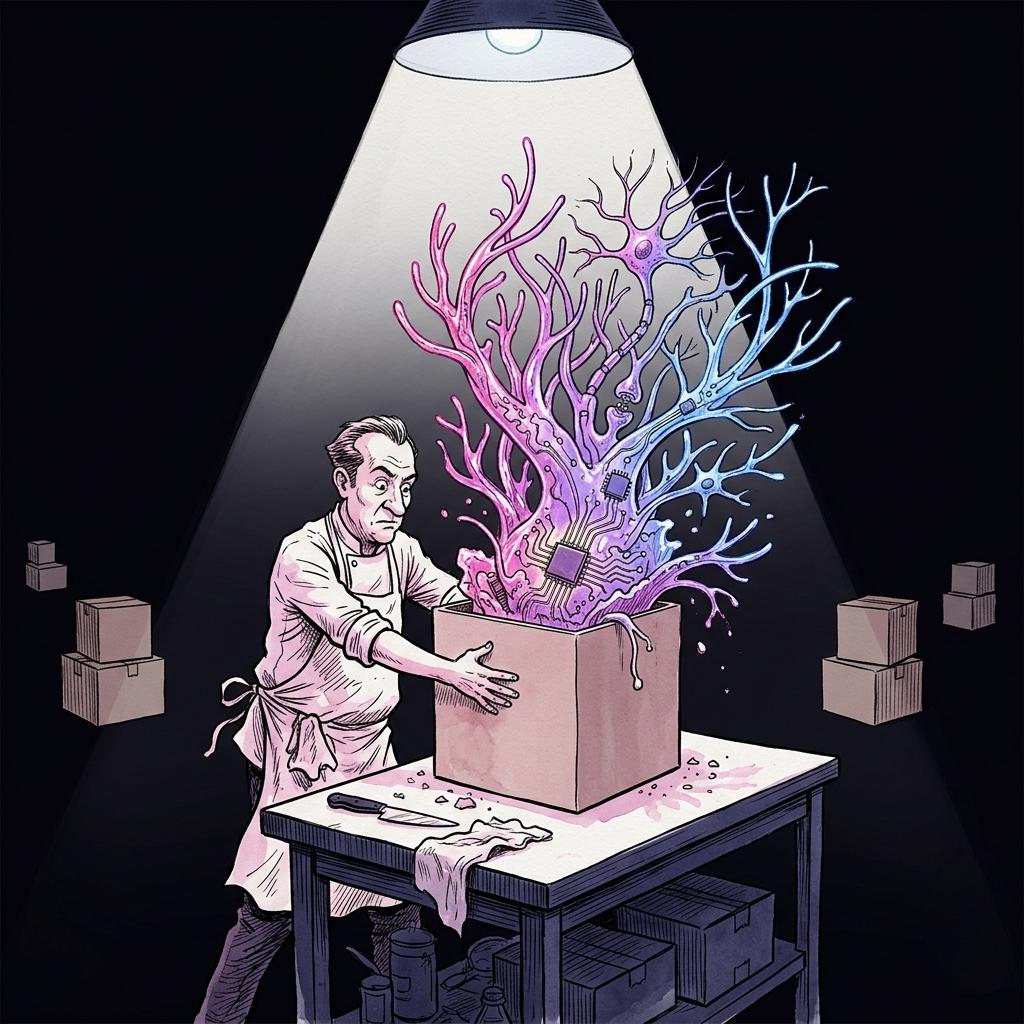
On May 13, 2026, Anthropic put a small business product on the shelf. Claude for Small Business. Fifteen ready-to-run agentic workflows. Fifteen reusable skills. Connectors into Intuit QuickBooks, PayPal, HubSpot, Canva, Docusign, Google Workspace, and Microsoft 365. A free AI Fluency for Small Business course built with PayPal. A ten-city US tour starting in Chicago the same day, free half-day workshops, a free month of Claude Max for every attendee. Every small business owner who has spent the last eighteen months feeling left out of the agent moment can now toggle a switch and have an invoice chaser, a month-end prepper, a tax-season organizer, a contract reviewer, and a lead triager working inside the SaaS lines they already pay for.
The product is good. The pitch is honest. The integrations work. The Register, covering the launch, called these "core tasks." TechCrunch called it Anthropic courting "a new kind of customer." VentureBeat read the broader move into enterprise Agent Skills as Anthropic's direct challenge to OpenAI in workplace AI. The Anthropic announcement names Intuit, PayPal, and HubSpot as integration partners and frames Claude as the orchestrator that ties their products together so a small business owner can plan payroll, close the month, run a sales campaign, and chase invoices without leaving the agent.
The product is not the problem.
What small business owners install when they install it is the problem.
The boxed promise
The numbers around the launch are real. The Small Business and Entrepreneurship Council ran a Technology Use Survey of 517 small business employers between February 17 and 23, 2026, and found that 82 percent had already invested in AI tools by spring of this year. Ninety-three percent of those plan to continue investing in the next twelve months. Sixty-two percent said they would increase AI spending. Over seventy percent reported productivity gains. More than sixty percent reported improvements in customer engagement and marketing. About half reported revenue growth or cost savings tied to AI use.
Zapier, the other category leader, spent the spring repositioning. The June 2026 Zapier writeup framed the company as no longer selling app-to-app triggers but a wider operating model with workflows, AI tools, agents, chatbots, and company guardrails. The Capsule CRM 2026 adoption report and the Adminify guide, the Crescent guide, the MindStudio guide, the Omniflow guide all say the same thing in different words. AI workflow automation for small businesses is the hottest category in productivity software. Estimates cluster at $50 to $2,500 a month for the stack. Reported time savings cluster at 15 to 25 hours a week. Payback windows of 30 to 60 days are now common in the trade press.
A small business owner reading the trade press in June 2026 is looking at the most compelling automation buy in the history of small business software. The pitch is: install the box, plug in your QuickBooks, plug in your HubSpot, plug in your PayPal, hit go. Get fifteen hours a week back. The pitch is true. The math works.
And it works for the median.
The other forty percent
Gartner published a separate prediction in 2025 that has been bouncing around the industry ever since. Over 40 percent of agentic AI projects will be cancelled by the end of 2027. The reason is rarely the technology. The reason is rarely the model. The reason, in the words of Gartner analyst Anushree Verma to MarTech in the week the prediction landed, is that most agentic AI projects right now are early-stage experiments or proofs of concept that are mostly driven by hype and are often misapplied.
The Squirro analysis of the same prediction put it plainer. Organizations attempt to automate current processes rather than reimagine workflows for an agentic environment. Agents create cascading failures when one agent's bad output becomes another's input. Poorly designed agentic applications add work to a process instead of removing it. The trade press has a word for the residue these projects leave behind. Workslop.
Forty percent is the median outcome of installing the box without architecting on top of it. It is the price small business owners pay for treating an agentic workflow library as a finished product instead of a substrate.
The median trap
A ready-to-run workflow is the median of what a thousand small businesses do.
The invoice chaser ships the way the bookkeepers and SaaS partners in Anthropic's design rooms told the team it should ship. The month-end prepper ships the way the accountants prep months. The lead triager ships the way HubSpot's CRM data suggests leads should be triaged. The connectors point at QuickBooks, PayPal, HubSpot, Canva, Docusign, Google Workspace, and Microsoft 365 because those are the SaaS lines with the deepest small business market penetration. The product is a beautiful, honest, accurate model of what the average American small business does.
The trouble is that almost no small business actually looks like the average American small business.
The whole point of a small business, the reason it survives against the chain, the consolidator, the franchise, and the platform, is the part of itself that fits no template. The customer comes back because of a specific habit the owner has of remembering names. The vendor gives you better terms than the chain because of a specific relationship the buyer has built over fourteen years. The books look right because the bookkeeper has done them for nine years and absorbed three near-disasters that would have killed a different business. The kitchen calls a specific produce supplier when the lettuce arrives wilted because the chef has a phone number for that supplier's son. The dispatcher knows which week of the year cash gets tight because rent, insurance, and the quarterly tax payment all land in the same eight days.
A workflow library encodes none of this. A workflow library is the residue of the business after you strip away the part that made it yours. A workflow library is the average of what was legible to the team that built it, and what is legible to a SaaS connector is exactly the part of your business that is also legible to every other SaaS connector in your category.
Install the box and rewire your operation to match what the box can do, and you are paying Anthropic a subscription to wear away the part of your business that was uncopyable.
The Square parable
The Digital Applied write-up of the launch makes a specific point about Square. The Square integration lets a restaurant pull register tape into the same agent that plans payroll and chases invoices. That is the legible part of a restaurant. Register tape, payroll, invoices, COGS analysis. A real restaurant runs on these. A real restaurant also runs on parts that never touch the register.
The chef who picks up the phone when the produce shipment arrives wilted runs the restaurant. The front of house manager who knows which regulars to comp during a slow Tuesday runs the restaurant. The owner who pre-orders cash in the second week of every September because rent, payroll, and the food safety inspector all bunch together runs the restaurant. The line cook who refuses to let the dishwasher quit because the dishwasher's mother is sick runs the restaurant. The pastry chef who keeps a fourteen-page personal recipe book at home because the restaurant's only competitive moat is one dessert nobody else has runs the restaurant.
The Claude for Small Business install runs the register tape, the payroll, and the invoice chase. Cleanly. Honestly. At a price the restaurant could never reach with a human hire. None of the rest is in the box. None of it can be. None of it ships in any version of any agentic library you could buy off the shelf, because the part of your business that was always your edge is the part nobody outside your business knows exists.
What the median costs you
Here is the cost of treating the workflow library as the answer.
Time savings come at you fast. SBE Council and the trade press are right about that. Fifteen hours a week, maybe twenty. The owner who has been chasing invoices on Tuesday nights stops chasing invoices on Tuesday nights. The bookkeeper who used to do the month-end stops doing the month-end. The marketer who used to write the copy stops writing the copy. The agent does these things, well, and fast, and for less than the loaded cost of an hour of human work.
The question is what fills the hours.
If the hours fill with more of the same shape of work, the box has eaten the small business's distinctive labor and replaced it with a faster version of the same generic operations every other small business now also runs. The chain down the street installed the same box. The franchise three doors down installed the same box. The platform competitor across the river installed the same box. Every owner in your category just got the same fifteen hours back and is doing the same generic faster operations. The competitive picture has not improved. It has compressed. Everybody got faster at the median. Nobody got farther from anyone else.
If the hours fill with the work that only you can do, the picture inverts. The owner spends the recovered hours architecting the layer on top of the box. The layer that captures what the bookkeeper knows. The layer that knows which supplier to call when the lettuce is wilted. The layer that knows the seven customers you do not chase because the friendship is older than the invoice. The layer that knows the week of the year cash gets tight. The layer that knows which dishwasher's mother is sick this month. The agent then runs the median and the idiosyncratic together, and what the customer feels is a small business that runs as fast as the chain and as warm as the family operation. That is the architecture move.
AI workflow automation for small businesses, properly understood
AI workflow automation for small businesses, the search term, the category, the trade press obsession of 2026, is a real thing. It is also incompletely described in the trade press.
The trade press describes the substrate. The Anthropic launch, the Zapier shift, the QuickBooks and HubSpot and PayPal and Canva and Square integrations, the fifteen workflows, the fifteen skills, the 82 percent adoption, the 25-hour weekly time savings. All real. All worth taking.
What the trade press does not describe is the architecture layer that sits on top of the substrate and turns the median into a private edge. The architecture layer is the work of sitting with the founder, the bookkeeper, the dispatcher, the chef, the front of house, the head technician, the lead estimator, the parts manager, and the receptionist who has been with the business for twenty-one years, and writing down what they know that nobody else knows. The architecture layer is the work of turning that knowledge into prompts, into skills, into guardrails, into validation rules, into idiosyncratic agent behavior that runs on top of the generic connectors and produces output the chain could never replicate. The architecture layer is the work of identifying the seven decisions in your week that the box would get wrong because the box does not know your business, and writing the agent loop that gets them right.
This is what AI workflow automation for small businesses actually means when it is done well. Install the box. Take the hours back. Then spend those hours architecting the layer that only your business can build, on top of the layer every business installed at the same time.
The trap dressed as the opportunity
The most dangerous part of the May 13 launch is not the product. The product is excellent. The most dangerous part is the rhetorical framing the trade press has wrapped around the product. Install Claude for Small Business and your business runs itself. Install Zapier and your business runs itself. Install Lindy and your business runs itself. The framing is the lie. No business runs itself, and the businesses that try will be the businesses that contribute to Gartner's forty percent.
The framing is a trap because it is delivered by parties who want the install. Anthropic wants the install. Intuit wants the connector activations. HubSpot wants the CRM seats. PayPal wants the payment volume. Zapier wants the workflow runs. The trade press wants the affiliate revenue from the install funnel. None of those parties is rewarded for telling you that the install is the easy part. None of those parties is rewarded for telling you that the install is the substrate, and the architecture is the work.
The party who tells you that is the party who has nothing to sell you except the architecture.
Why architecture is the only defensible move
The technical reason is clear. Models are commoditizing. Anthropic, OpenAI, Google DeepMind, Meta AI, xAI, Mistral, and DeepSeek are all shipping frontier-class small models cheaply enough that the cost of inference for a small business agent has collapsed to near-zero. Connectors are commoditizing. QuickBooks, PayPal, HubSpot, Canva, Docusign, Google Workspace, and Microsoft 365 are all opening agentic surface area at the same rate. Workflow libraries are commoditizing. Anthropic shipped fifteen. Zapier has thousands of templates. Lindy ships pre-built agents. Make ships scenarios. Every category leader is racing the median to zero.
The thing that is not commoditizing is the knowledge inside your business. The bookkeeper's nine years of memory is not in any model. The chef's phone number for the produce supplier's son is not in any connector. The pattern of which customers you comp is not in any workflow library. The week the cash gets tight is not in any template. These are the assets a small business has been quietly accumulating since the day it opened, and they are the assets that no install can give you and no install can take from you.
Architecting the agent on top of those assets is the only thing a small business can do in 2026 that the chain, the consolidator, the franchise, and the platform cannot copy by next quarter. Everything else, every install, every connector, every workflow template, is matched by everybody else as soon as they install the same box.
The argument for architecting
The May 13 launch is real. Claude for Small Business is the cleanest packaging of small-business AI that has shipped to date, and the integrations with Intuit, PayPal, HubSpot, Canva, Docusign, Google Workspace, Microsoft 365, and Square are honest commercial substrate that deserve the adoption they are getting. Install it. Take the fifteen hours back. The Zapier repositioning is real, and the broader category of AI workflow automation for small businesses is now mature enough to bet on.
What is not in the box is your edge.
Your edge is the part of your business that did not fit anybody else's template. Your edge is the seam between what the owner knows and what the customer feels. Your edge is the bookkeeper's nine years of memory. Your edge is the dispatcher's pre-order in the second week of September. Your edge is the chef's phone number for the produce supplier's son. Your edge is the seven invoices you do not chase because the friendship is older than the receivable. Architecting the agent on top of that edge, with the substrate Anthropic shipped doing the rest, is the work that separates the small businesses that own the next decade from the small businesses that will be composted into somebody else's median.
That is the work we do at Agor AI Advisory. We do not install the box. We architect on top of the box. We sit with the founder, the bookkeeper, the dispatcher, the chef, the part of the business that lives in nobody's head but yours, and we build the layer that turns what only you know into what only your agent can do.
Sources
- Introducing Claude for Small Business, Anthropic, May 13 2026
- Anthropic courts a new kind of customer: small business owners, TechCrunch, May 13 2026
- Anthropic butts in to small business, promises help with payroll and other core tasks, The Register, May 13 2026
- Claude for Small Business: QuickBooks, HubSpot, Square, Digital Applied, 2026
- Anthropic launches enterprise Agent Skills and opens the standard, VentureBeat, 2026
- SBE Council 2026 Small Business Technology Use Survey
- Gartner Predicts Over 40% of Agentic AI Projects Will Be Canceled by End of 2027
- Why 40% of Agentic AI Projects Fail and What to Do About It, Squirro