On July 9, 2026, the artificial intelligence industry experienced a massive simultaneous release. Mark Zuckerberg appeared on a live broadcast to announce Meta Muse Spark 1.1. This model features a one million token context window. It possesses native computer use across desktop, browser, and mobile environments. It introduces parallel subagent delegation. For the first time, Meta paired the open release with a paid developer API, pricing input tokens at a mere $1.25 per million.
Hours later, OpenAI launched GPT-5.6. They split the release into three tiers named Sol, Terra, and Luna. The flagship Sol model includes an Ultra subagent mode and a Max reasoning effort setting. Both companies delivered spectacular technical achievements. Both companies proved their systems can reason, plan, and execute complex tasks with minimal human intervention. Both companies handed enterprise leaders a profound amount of cognitive power.
The day before these dual releases, the research firm Transform published a sobering report. Analysts projected global artificial intelligence spending to hit $2.5 trillion in 2026. Despite this capital flood, they found that 80 to 95 percent of enterprise AI pilots never reach production.
On the exact same day as the Meta and OpenAI announcements, Roland Berger released a joint study with the Manufacturers Alliance Foundation. Their survey tracked executives attempting to scale artificial intelligence across industrial operations. Nearly two thirds of the respondents admitted they were completely stalled. They cited data cleanup and governance barriers as the primary culprits.
The contrast between the vendor announcements and the enterprise reality is absolute. The vendors ship agents capable of operating a desktop computer. The buyers fail to integrate those agents into their daily workflows. A massive disconnect exists between buying intelligence and actually extracting value from it.
Enterprise leaders fundamentally misunderstand the mechanics of software deployment. They watch a demonstration of Muse Spark 1.1 executing a multi-step research task. They assume this raw capability will directly translate into corporate efficiency. They launch a pilot program to verify the claims. The pilot succeeds. The team celebrates. Then they attempt moving an AI pilot to production, and the entire initiative collapses under its own weight.
This failure stems from a persistent cognitive error. Executives view intelligence as the final objective. They believe a smarter model automatically creates a better business process. They wait for the next release. They assume GPT-5.6 will solve the integration problems that GPT-4o could not.
Intelligence solves nothing on its own. A highly capable model introduces massive systemic risk if deployed without boundaries. A pilot program tests capability. Production environments demand strict constraints. When you build a pilot, you ask the model to show its maximum potential. When you move to production, you must restrict the model to a tiny set of permissible actions.
The capability trap ensnares teams who optimize for intelligence rather than control. They spend months refining prompts to make the model smarter. They ignore the architecture required to keep the model safe. A smart agent with access to your internal network is a liability. It requires a rigid containment system to prevent catastrophic errors. Moving an AI pilot to production requires a complete reversal of priorities. You must stop admiring the reasoning engine. You must start building the fence around it.
The Illusion of the Sandbox
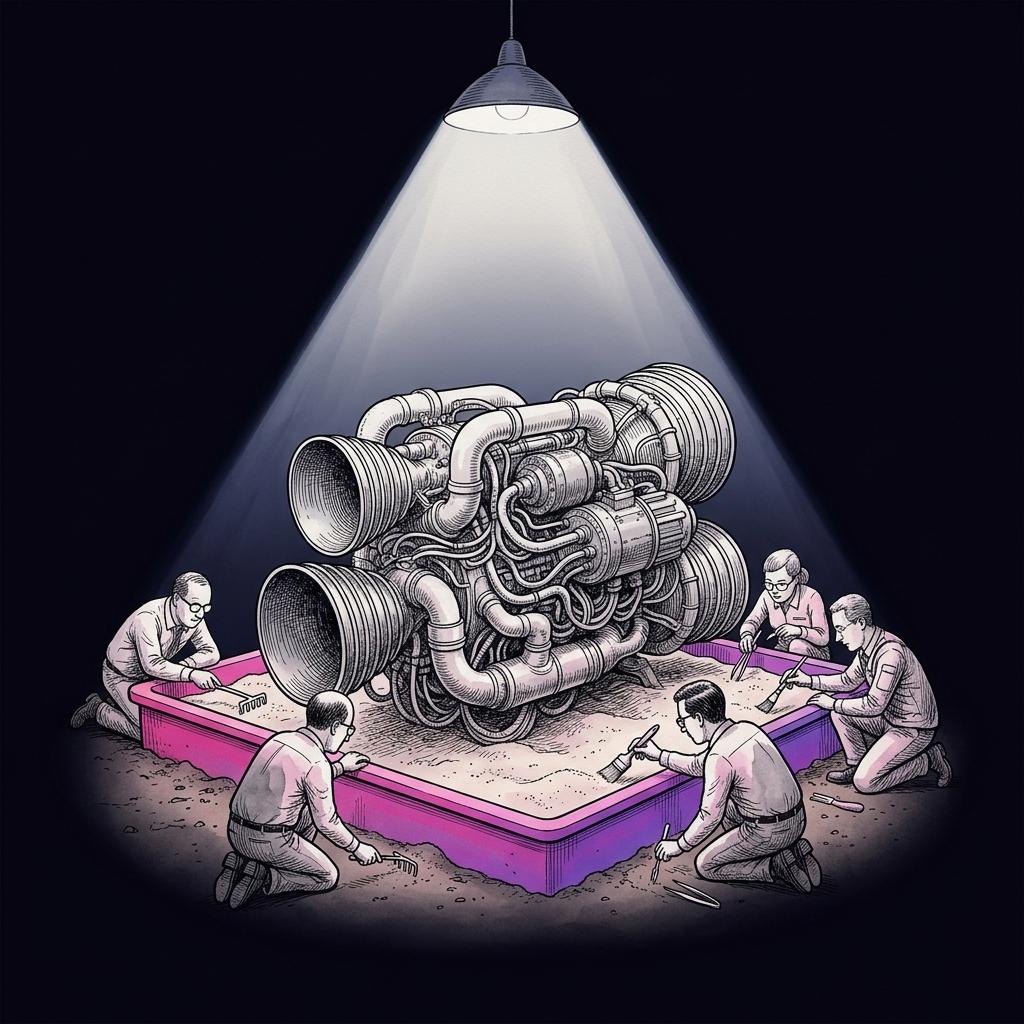
A pilot program is a fiction. It exists in a sanitized environment. The engineering team selects a narrow use case. They extract a pristine dataset. They format the information perfectly. They feed this curated data to the model and ask a predictable sequence of questions.
The model performs brilliantly. It generates accurate summaries. It drafts articulate emails. It identifies patterns in the data. The executive sponsor sees the results and approves the budget for a full deployment.
This process guarantees failure. The sandbox removes every element of friction that defines a real business. In a live environment, data is messy, unstructured, and contradictory. Application programming interfaces fail. Network latency spikes. Employees input typos. Regulations change. The sandbox protects the artificial intelligence from the reality of the enterprise. Production exposes the enterprise to the reality of the artificial intelligence.
When an agent operates in production, it encounters edge cases constantly. If you deploy an agent with parallel subagent delegation, it will attempt to solve problems by spawning copies of itself. In a sandbox, this looks like a miracle. In a live corporate network, a runaway subagent loop can overwhelm your cloud infrastructure in minutes. It can trigger thousands of unauthorized API calls. It can incur massive billing charges from the vendor.
The sandbox proves the math works. The vendor already proved the math. You do not need a pilot to verify that GPT-5.6 can read a PDF. You need an architecture that ensures GPT-5.6 only reads the exact PDFs it has permission to access.
Consider a human resources pilot. The team feeds the model the official employee handbook. They ask the model to explain the remote work policy. The model provides a flawless answer. The team decides to push the chatbot to production.
In production, the model has access to the entire human resources intranet. The intranet contains the current handbook. It also contains three previous versions of the handbook. It contains draft memos from the legal department. It contains meeting notes from a manager complaining about remote work.
A probabilistic model cannot reliably distinguish between the official policy and a discarded draft. It will blend the information. It will confidently tell an employee they have privileges that were revoked three years ago. The pilot measured the ability to read text. Production measures the ability to resolve conflicting data sources. The model fails because it lacks a constraint layer to filter its inputs.
The Data Readiness Delusion
The Roland Berger study isolated data readiness as a primary execution barrier. Two thirds of surveyed manufacturers stalled their deployments because their data was entirely unprepared for algorithmic consumption. They bought the intelligence. They neglected to build the pipes.
Companies operate under a dangerous delusion regarding their own archives. They assume their data is ready because they have a massive volume of it. Volume means absolutely nothing to an agentic system. A decade of historical records sitting in a data lake is useless if the records lack strict schemas.
When you feed unstructured, unverified data to an agent, the agent invents relationships that do not exist. It fills the gaps with probabilistic guesses. It generates hallucinations based on formatting errors in your spreadsheets.
Moving an AI pilot to production forces a confrontation with your own archives. You discover your data is a swamp. You find conflicting customer records. You find missing product codes. You find undocumented database tables. You have to drain the swamp before you can build the factory.
This requires brutal, unglamorous work. You must enforce strict data typing. You must build extraction and transformation pipelines. You must implement vector databases with precise metadata tagging. You must ensure that when the model queries a product price, it only receives the current, approved price from the master database.
You cannot solve a data governance problem by upgrading to a smarter model. A brilliant model processing garbage data will simply generate highly articulate garbage. It will invent facts with total confidence. It will execute flawed decisions at machine speed. The intelligence of Muse Spark 1.1 cannot fix your broken internal data structures. It can only amplify them.
Intelligence is a Commodity
Look closely at the pricing structures announced in July 2026. Meta sells Muse Spark 1.1 input tokens for $1.25 per million. OpenAI aggressively prices the Terra and Luna tiers of GPT-5.6 to undercut competitors. Intelligence is now a cheap, abundant commodity.
You can rent a reasoning engine for fractions of a cent. You cannot rent the governance layer required to use that engine safely. You must build the governance layer yourself.
Many organizations fail to recognize this distinction. They treat artificial intelligence like traditional software as a service. They assume they can buy a subscription, distribute logins, and watch productivity soar. This mental model is entirely wrong.
Artificial intelligence is a raw material. It is comparable to electricity or high pressure steam. You do not buy raw steam and release it into your office. You build pipes, valves, and turbines to capture the energy and convert it into useful work. The intelligence requires physical and digital infrastructure to contain it.
Vendors want you to focus on the intelligence. They publish leaderboards. They boast about parameter counts. They highlight benchmark scores. They want you to believe that the smartest model wins.
The smartest model does not win. The most integrated model wins. A mediocre open source model with perfect access to your structured enterprise data will destroy a frontier model running in a vacuum. The value lives in the connection between the reasoning engine and your proprietary systems. The connection requires engineering. The connection requires constraints.
The Governance Gap
The THINK Digital Partners report identified the governance gap as a primary failure point for enterprise pilots. Organizations without active artificial intelligence governance delay risk identification until the final compliance review. By then, the architecture is set. The lawyers review the system. They ask how the engineering team prevents the model from violating a core corporate policy. The engineering team points to a prompt. The lawyers kill the project.
You cannot secure a system with a prompt. A prompt is a suggestion. A probabilistic model will eventually ignore the suggestion.
Conversely, companies with active governance put twelve times as many projects into production. They succeed because they design the boundaries before they write a single line of code. They define the acceptable behavior matrix. They build the compliance checks directly into the routing layer.
Governance is an engineering discipline. It requires compile time checks. It requires strict input validation. It requires output sanitization. It requires an immutable audit log of every decision the model makes.
When you build governance into the architecture, moving an AI pilot to production becomes a predictable engineering task. You present the compliance team with a deterministic system. You prove that the model physically cannot execute an unauthorized action. You show them the hardcoded fail safes. The project survives the review because you removed the trust from the equation. You do not trust the model. You trust the boundary.
The Pivot to Constraint
To succeed, you must shift your focus from capability to constraint. You must build a shell around the model.
The shell is the proprietary software layer that sits between the reasoning engine and your business systems. The shell dictates the rules of engagement. It enforces role based access controls. It validates inputs before they reach the model. It sanitizes outputs before they reach the user.
We can see this architectural shift happening among the most mature engineering teams. In late June 2026, Cohere released the Aya-Enterprise framework. This release generated massive interest because it targets a very specific problem. It provides tooling for enterprises to securely deploy models with fewer than ten billion parameters.
These teams are actively choosing smaller, less capable models. They realize that a focused model wrapped in a heavy constraint architecture delivers far more value than a massive model running without boundaries. A ten billion parameter model is easier to control. It is cheaper to run. It forces the engineering team to rely on deterministic software for critical business logic.
Infrastructure as code is becoming the dominant paradigm for artificial intelligence deployment. Startups like InfraWeave AI are raising massive funding rounds to automate the deployment of these constraint environments. The market is recognizing that the orchestration layer is more valuable than the model itself.
Moving an AI pilot to production means accepting that the model should do as little as possible. The model should handle the cognitive translation. It should parse the unstructured request. It should identify the user intent. It should extract the relevant variables.
Then the model must stop.
It must hand those variables to a deterministic script. The script checks the database. The script verifies the permissions. The script executes the transaction. You never allow the model to write directly to the database. You never allow the model to send the email without a deterministic review step.
Architecting the Boundary
Building this boundary layer requires severe discipline. You must map every point of contact between the artificial intelligence and your corporate systems.
Consider a procurement agent built on Muse Spark 1.1. In a pilot, you ask the agent to draft a purchase order for laptop replacements. The agent searches the web, finds the best prices, and generates a flawless document.
In production, drafting the document is the easiest step. The boundary layer must handle the complexity. The shell must intercept the request and verify the user has procurement authority. The shell must query the enterprise resource planning system to check the remaining departmental budget. The shell must restrict the agent's web search to approved vendor catalogs.
If the agent generates a purchase order that exceeds the budget, the shell must block the transaction. It must return an error message to the user. It must log the blocked attempt in the compliance registry.
The intelligence remains quarantined inside the shell. The reasoning engine never touches the financial API directly. It only communicates with the shell. The shell holds the API keys. The shell manages the authentication.
This architecture protects the enterprise from hallucinations. If the agent hallucinates a vendor that does not exist, the shell will fail to find that vendor in the approved database. The transaction will halt. The error will surface. The business remains safe.
Consider a customer service routing system. In a sandbox, the model reads a customer email and generates a polite response offering a full refund. The executives love the tone.
In production, the model cannot be trusted to issue refunds based on probabilistic reasoning. The boundary layer intercepts the intent. The model classifies the email as a refund request. The boundary layer takes over. It queries the customer relationship management software for the purchase history. It queries the policy engine to check the return window. If the policy permits, the boundary layer executes the refund via the billing API.
The model never touches the money. The model only translates the human intent into a machine readable classification. The deterministic boundary handles the actual commerce. This is the only way to operate safely at scale.
The Liability of Action
The stakes for this architecture are rising exponentially. The July 2026 model releases crossed a critical threshold. Models no longer just generate text. They take action.
GPT-5.6 Sol includes an Ultra subagent mode. Muse Spark 1.1 features native computer use. These models can open applications, click buttons, and submit forms. They are designed to act autonomously on behalf of the user.
Action carries liability. If an employee makes a mistake, the company faces consequences. If an autonomous agent makes a mistake at machine speed, the company faces catastrophic exposure.
You cannot outsource accountability to the vendor. OpenAI and Meta provide the reasoning engine. They accept zero liability for the actions that engine takes inside your network. If your procurement agent accidentally orders ten thousand laptops instead of ten, you own the invoice. If your customer service agent promises a discount that violates a pricing floor, you must honor the discount.
This liability is the primary reason the Transform report found up to 95 percent of pilots stall. When the project reaches the legal and compliance review, the attorneys ask a simple question. They ask how the system guarantees it will never violate a corporate policy.
If your answer relies on the intelligence of the model, the project dies in that room. You cannot promise that a probabilistic model will behave deterministically. It will eventually hallucinate. It will eventually make a bizarre leap of logic.
You can only pass the compliance review if you show the attorneys the constraint architecture. You must show them the deterministic shell. You must prove that even if the model goes completely insane, the shell will physically prevent it from executing an unauthorized action. You must show them the kill switch. You must show them the immutable audit logs.
The attorneys do not care about the one million token context window. They care about the blast radius of a failure. A heavy constraint architecture minimizes the blast radius to zero.
The End of the Pilot Era
The era of the generative pilot is over. We have spent three years marveling at the intelligence of these systems. We have built thousands of sandboxes to watch them perform tricks. We have celebrated benchmark scores and parameter counts.
The market has exhausted the value of capability demonstrations. Every executive knows the models are brilliant. Every competitor has access to the exact same intelligence. You gain zero competitive advantage by proving that GPT-5.6 can summarize a meeting.
The only competitive advantage left is operational integration. The winners in this next phase will be the companies that stop testing intelligence and start building constraints.
They will treat artificial intelligence as a dangerous, highly reactive raw material. They will build the heavy industrial piping required to handle it. They will enforce strict data hygiene. They will mandate compile time governance. They will wrap every agent in a rigid deterministic shell.
Moving an AI pilot to production is a test of organizational discipline. It requires you to say no to the infinite possibilities of the model. It requires you to define the exact, narrow boundaries of acceptable behavior. It demands a level of architectural rigor that most companies have entirely forgotten how to execute.
Intelligence is easy to buy. Constraints are incredibly hard to build. The companies that master the architecture of constraint will scale their systems and dominate their markets. The companies that remain trapped in the illusion of capability will watch their pilots fail, one after another, until they run out of capital.