Essay
Look Ma, No Hands
The Reformation Watch now publishes what it confirms without anyone approving it first. Its first automatic entry is Ben Bernanke joining Anthropic's Long-Term Benefit Trust, thirty-eight days after the confidential S-1.
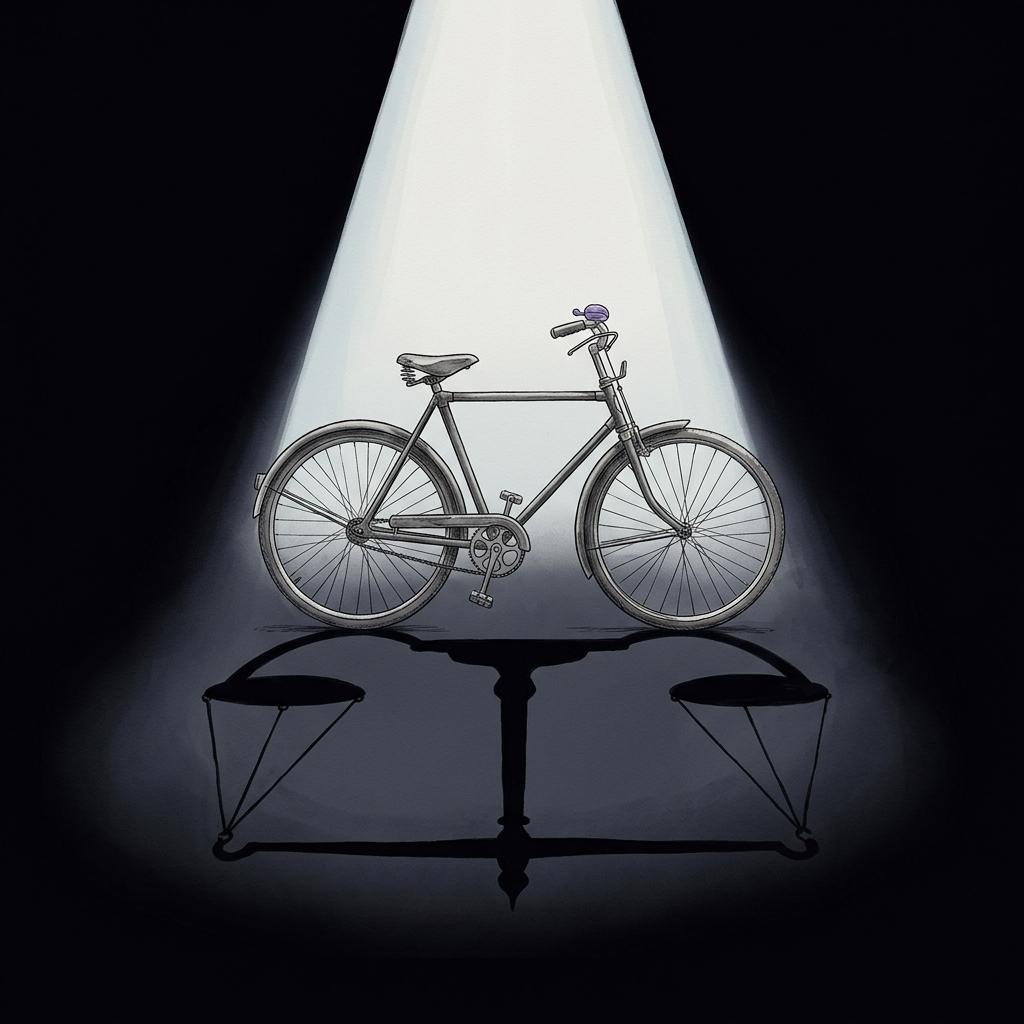
…led by an invisible hand to promote an end which was no part of his intention.
Adam Smith, The Wealth of Nations, 1776
The email came in at 06:19 on Tuesday, from a program that had existed for less than two days. I built it on Sunday for one narrow job: to check, every morning, the seven things my essay Every Reformation Needs a Prince said would show its prediction holding or failing. Ten governance documents diffed against yesterday's copies. The lobbying filings. The news, screened hard, because a headline is thin evidence. And one rule over all of it: the watcher may choose which sentence is the evidence, but that sentence has to exist, character for character, in the thing it fetched that morning, or it gets thrown away at any confidence.
Monday it sent the heartbeat. Nothing confirmed. Tuesday it sent an alert filed under Anthropic and the endowment, with one quote inside, "Ben Bernanke Joins Anthropic's Long-Term Benefit Trust," scored 70 out of 100. Seventy is the lowest score the watcher is allowed to call "confirmed." Squeaked in.
I'd love to tell you my watcher broke the story. It did NOT. Anthropic announced the appointment on 9 July. More than ten weeks later Google News resurfaced a Stocktwits write-up of it wearing a fresh date, and my brand-new machine fell on it like a retriever on a tennis ball that has been in the yard since summer. Scoop? Some scoop.
Well, as of that morning the Reformation Watch publishes with no hands on it, and the first thing it published asks whose hands pick Anthropic's board.
Until Tuesday there was a person between the watcher and the public page, and the person was yours truly. Findings went to my inbox, and nothing reached the scoreboard unless I committed it. On Sunday that looked responsible. On Tuesday it looked like the one part of the design that would rot. Why? Because I wrote the prediction, and I would be approving the evidence for it. My first reaction to a 70 that agreed with my essay was to publish it the same day. I have no idea how fast I would have moved on a 70 that disagreed, and neither do you, which is the problem.
That is how predictions die, and nobody has to cheat. A forecast with a public scoreboard is the only kind that can lose, which is what makes it worth anything. Then the author keeps the ledger. Nobody fakes an entry. The agreeable ones go up on Tuesday and the awkward ones wait for a Friday that never comes. The cost is that the prediction quietly turns unfalsifiable again, which is the exact thing the essay accused the creeds of. For shame, your author. Juvenal asked who guards the guards. My version is less classical: who approves the pull request?
So the hands come off. "Automatic" is an applause light until you say what stops it. A finding reaches the page only if it is confirmed, meaning scored 70 or more and quoting its source exactly. The page carries the quote, the link, the score and one fixed sentence; the watcher's own reasoning stays in my inbox, because nothing checks it. A second outlet on the same story inside thirty days is held back and named in my inbox instead. The Pentagon case, which the essay already counts, is held for a year, so its long tail of coverage can never become a second datapoint. Every automatic entry says in plain words that nobody reviewed it, and if the machine fails to publish something it should, the run goes red and I get the alert.
The gate proves the quote is real. It does not prove the watcher read it right.
Now, dear reader: is Bernanke a hit? There are two popular readings of a Nobel laureate joining a trust, and I'd like to hold both.
The first says the creed just hired its strongest possible guardian. Bernanke's Nobel, in 2022, was "for research on banks and financial crises"; the committee's line is that he "showed how bank runs were a decisive factor" in making the Great Depression so deep and prolonged. November 2023 at OpenAI was a run on a board: a board built to be able to fire its chief executive fired him, 738 of roughly 770 employees signed a letter demanding he return, and he was back in five days. If you wanted one person on the body that elects your directors who knows what a run feels like from the inside, you would pick the man who chaired the Fed through 2008.
The second reading says a former Fed chairman is exactly the name you want on page one of a prospectus. Bernanke also earned "Helicopter Ben" from a 2002 speech in which he compared a money-financed tax cut to "Milton Friedman's famous 'helicopter drop' of money," and nobody on Wall Street has forgotten it. A roadshow audience would find the name very soothing.
The dates don't choose between them. Anthropic confidentially filed its draft S-1 on 1 June. Bernanke joined on 9 July, thirty-eight days later. That is the year before a listing on any calendar, which is why the watcher files it under indicator four, a trust or foundation whose composition is adjusted in the year before a listing, and why I am leaving it there.
Anyway, both readings argue about the man, and the man ain't the mechanism. The mechanism is in Anthropic's own 2023 description of the Trust. The Trust elects directors through a class of stock that only it holds, Class T, and its trustees choose their own successors on one-year terms. Good. There are also "failsafe" provisions that "allow changes to the Trust and its powers without the consent of the Trustees if sufficiently large supermajorities of the stockholders agree." Who can remove whom, and on what vote: that was the essay's whole question, and it is not answered by who sits on the Trust. It is answered by a number the 2023 description does not give, and after a listing the question of who those stockholders are gets a new answer. Publish the number, Anthropic.
By the day Anthropic's shares first trade, the endowment side of the watch will carry more entries than the creed side. That is my call. Today it stands at one each.
You need not believe me. Two entries is a coin that has landed once each way, the watcher only sees what someone publishes, and a prospectus showing the Trust electing a board majority, behind a failsafe supermajority set high enough to bite, would be the best evidence yet against my own essay, whichever column it lands in.
If you are thinking about buying the IPO, the day the S-1 turns public, open it on EDGAR, search for "Class T", and write down three numbers: how many directors the Trust elects today, the date it elects a majority, and the stockholder supermajority that can change it. If any of the three is missing, that is your answer. If you only want to know whether my prediction is holding, bookmark the watch and count the two columns once a month; it takes about twenty seconds. If you think the watcher misread Bernanke, the quote and the source sit right under the entry, which is the whole point of taking my hands off it. My own position: long the endowment column, short the creed, sized no bigger than a Stocktwits repost.
Look, Ma: no hands. Keep yours on the prospectus.
Sources
- Ben Bernanke joins the Long-Term Benefit Trust, Anthropic (9 July 2026)
- The Long-Term Benefit Trust, Anthropic (19 September 2023)
- Anthropic confidentially submits draft S-1 to the SEC, Anthropic
- Anthropic appoints former Fed Chair Ben Bernanke to its independent trust, CNBC
- Ben Bernanke Joins Anthropic's Long-Term Benefit Trust, Stocktwits (the report the watcher quoted)
- The Prize in Economic Sciences 2022, press release, Nobel Prize
- Deflation: Making Sure "It" Doesn't Happen Here, Ben S. Bernanke, Federal Reserve (21 November 2002)
- The Reformation Watch, agor.me
Want this kind of automation working for your business?
Agor AI designs and ships the systems these posts describe, scoped in weeks, not quarters.
Book a Free Strategy Call